"Tales of pioneer hardship and deprivation have been told many times. Yet still we remember in wonder, that people accomplished so much with so little; that men and women with simple tools, their bare hands, and their own inventiveness cleared the land, drained the swamps, made their own clothing and provided their own food. Through all these difficulties God was with them and they wanted their children educated intellectually and spritually." from Norfolk Street United Church history

Friday, October 18, 2013

“Getting Hooked on Harness Brass, Barn Lanterns and License Plates"

Bert Black's Collection at the
Wellington County Museum and Archives

ABOYNE, Ontario - October 15, 2013 – Ornate, functional and fun, a collection of harness brass, barn lanterns and license plates will hook your attention this fall. Bert Black is the third collector to be featured in the Wellington County Collects exhibit that showcases the unique collections of Wellington County residents on display in the Wellington County Archives.

“From hundreds of different objects, these three collections highlight a selection of pieces that our third collector loves the most,” Amy Dunlop, Curatorial Assistant, said. “There is a little bit of everything and each object tells a part of Bert Black’s story. That is what makes this exhibition a wonderful experience for the public.”

“In my collection, I have over 120 horse brasses, more than 150 license plates (dating from 1917 to the 1970s) and a variety of Wellington County-made lanterns, including railroad and construction lanterns,” Bert said. “Why do I collect? Nostalgia...preserving articles that were used or part of days gone by is what interests me.”

Bert Black’s collection will be on display until January 5, 2014

If you’d like to bring your collection to the Museum, please contact Amy Dunlop at: 519.846.0916 x 5232 or amyd@wellington.ca to get your name on the list.

The Wellington County Museum and Archives is located on Wellington Road #18 between Fergus and Elora. Admission is by donation. It is open weekdays from 9:30 am to 4:30 pm and 12:00 pm to 4:00 pm on Saturdays and Sundays.

Friday, October 4, 2013

Canadian company uses Facebook campaign for new obituary and memorial website featuring partnership with CanadaHelps.org

theObituaries.ca asks Canadians: How do you want to be remembered?

OSHAWA, Ontario, October 3, 2013 /Canada NewsWire/ - Most of us have probably paused at one time or another to reflect on our lives while wondering how people might remember us after we are gone. theObituaries.ca is inviting Canadians to think about just that through a new Facebook app. This app was developed in conjunction with the launch of the organization's advanced pre-plan, obituary and memorial website designed to build a national online registry with all the services needed to assist those affected by the loss of a loved one.

"Unfortunately death is a fact of life. By asking people to reflect on their life and how they would like to be remembered through our Facebook campaign and other popular social networking sites, we think people might be surprised by what they learn about themselves, their family and friends", says John Cowie, a partner at theObituaries.ca and President of Adlure Media.

theObituaries.ca has everything families and friends need to respectfully honour a loved one. Beautiful obituary announcements that include photos, service details and maps; the ability to offer condolences privately, publicly and via social media; make secure charitable donations;deliver flowers or sympathy cards and more. Individuals can Pre-Plan announcements during a less stressful time; create and post Obituaries with many photos and unlimited text; and/or ensure there is a lasting online Memorial that perpetually honours the loved one.

An affordable integrated solution

The value for someone signing up with theObituaries.ca is that regardless of when the product is selected, there is only a one-time fee of $125. An individual creates a Pre-Planned Obituary that transitions to an Obituary Announcement, and then automatically converts to a Memorial without any additional fees. The assigned owners of the Memorial are able to update and refresh the content anytime, from anywhere. The fully integrated site includes social media platforms and easy sharing tools, group email sharing, Facebook wall posts, Twitter and even LinkedIn for business related network sharing and awareness.

Partnership with CanadaHelps.org facilitates fast and easy donations

theObituaries.ca is a feature-rich website. One of its key features is its partnership with CanadaHelps.org. When honouring the deceased, families often suggest donations be made to a specific charity. Those viewing an obituary or memorial on theObituaries.ca are able to easily and securely donate to any of the more than 85,000 registered Canadian charities.and instantly receive a tax receipt by e-mail.

"We're excited to partner with theObituaries.ca to help make it easier for people to make donations in honour of a loved one," said Marina Glogavac, President & CEO, CanadaHelps.org. "Since 2000, through our web site we have facilitated over $300 million in charitable donations to over 13,000 charities. We are all about making giving simple which takes on an even greater importance during the difficult time of losing a friend, family member and loved one." "CanadaHelps.org was the only partner for us to truly consider," added James Stewart, Founder & CEO of theObituaries.ca. "They make 'in memory of donations' easy for our customers."

Jody Rowland placed a Memorial on theObituaries.ca and reached more people more quickly

Jody Rowland, a carpenter in Gravenhurst, Ontario, was considering placing a memorial in his local newspaper to mark the 10-year anniversary of the passing of his father. Then he thought about who he wanted to share it with and the best way to reach them. As a military veteran, his father had lived in many parts of Canada, far beyond the reach of his local newspaper. A conversation with Randy Smart, a member of his baseball team and co-founder of theObituaries.ca, provided Jody with the forum and reach he was looking for.

"We set up a beautiful memorial for my father that has been shared with his loved ones who live across the country, Jody says. " And over time we plan to continue to update the memorial with more stories and photos including an early one of him in his Royal Canadian Navy uniform."

Having lost his father at a young age and with a wife in the life insurance business, Jody is very aware of the importance of planning for one's passing, which now has him very interested in theObituaries.ca's Pre-plan Obituary service.

"My wife and I definitely plan to do this. I want to make all the arrangements in advance, have my obituary written and ready to post so I know exactly how it is going to be seen and that nothing will be left to chance or get lost in translation."

Inspiration behind theObituaries.ca

Inspired by personal loss and the challenges his family faced when trying to ensure friends, coworkers and communities were aware and afforded the opportunity to pay their respects, Oshawa resident, James Stewart, decided there had to be a better way. Along with his three partners, he launched theObituaries.ca. The original concept was a website for consumers, however the project grew to include funeral professionals and the services families need to plan and receive support.

"With nearly 2,000 funeral homes in Canada and approximately 280,000 families affected by deaths each year, and the fact that many funeral services occur within 1 to 3 days of the passing, sharing announcements quickly and effectively is critical," said Stewart, Founder and CEO of theObituaries.ca. "We make it easier for funeral homes and families to tastefully inform more people, more quickly, with less effort and cost than available elsewhere."

theObituatries.ca makes it easier for funeral homes

In addition to the complete solution for consumers, theObituaries.ca also provides funeral homes with a free professional, integrated and customized web site or they will work with a funeral home's existing site to leverage their services.

"If we help funeral homes with their technology needs, they should be able to focus more time on what they do best - helping families, when they need it most," added Randy Smart, Co-Founder and COO of theObituaries.ca."

Based in Oshawa, Ontario, theObituaries.ca is an all-Canadian company founded in 2012. The site and web services are designed to provide families with affordable, respectable obituaries and memorials that families can own and manage in perpetuity, sharing their family history with future generations.

Thursday, September 26, 2013

Chapbooks Reveal Unhappy Fairy Tale Endings

University of Guelph library holds more than 600 titles

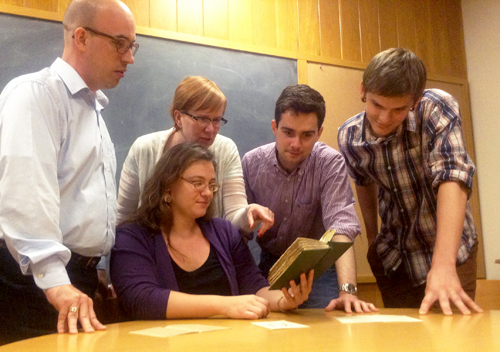
Seated: PhD student Sierra Dye. Standing, left to right: Post-doc Andrew Ross, librarian Melissa McAfee, visiting PhD student Dara Folan from the National University of Ireland and Guelph undergrad Jeremy Dechert.

GUELPH, Ontario - September 25, 2013 at Guelph by Andrew Vowles

Happily ever after? Not really, says Adrienne Briggs, a recent Guelph history grad. Fairy tale endings are for Disney. To learn about the original and often graphic stories of Sleeping Beauty, Cinderella and the like, you might look over some of the hundreds of Scottish chapbooks in the U of G library archives.

That’s what Briggs and other students did earlier this year for a pilot project in their U of G history class that will see old-time chapbooks meet modern communications technology.

Chapbooks were popular booklets containing songs, ballads, poems and short stories written for the increasingly literate Scottish masses of the mid-1700s to mid-1800s, says history post-doc Andrew Ross. Between eight and 24 pages in length, they covered such topics as romance, travel, comedy, politics, fairy tales and social customs.

The books were sold town to town by peddlers, or chapmen, says Ross. Eventually, chapbooks were supplanted by newspapers and other periodicals....read more

Saturday, September 21, 2013

Sheet Music From Canada's Past

Sheet Music From Canada's Past

If you love Canadian history and music, you will most find this site most fetching. Created by the Library and Archives Canada, the site brings together intriguing and historically important sheet music from the past 150 years.

The collection exists due to the diligence of Helmut Kallmann, a young CBC music librarian who began to collect sheet music in the early 1950s. Today, the archives contain over 20,000 pieces of sheet music, many of which are available online. In addition, the site offers a handful of musical clips that represent pre-1921 Canadian musicality.

Visitors can Search Sheet Music to get started or browse the Gallery area. Here visitors can look around via themes, including Colleges, Flowers, Summer Sports, and Winter.

It is worth noting that although we reviewed the English site, the archives are also available in French.

Visit the site at: http://www.collectionscanada.gc.ca/sheetmusic/

>From The Scout Report, Copyright Internet Scout 1994-2012. http://scout.wisc.edu/

Sunday, September 1, 2013

Library and Archives Canada and Canadiana.org partner on digitization, online publication of millions of images from archival microfilm collection

OTTAWA, Ontario August 29, 2013 - Library and Archives Canada (LAC) and Canadiana.org have strengthened their long-standing partnership to considerably increase access to Canada’s documentary heritage by way of a large-scale digitization partnership involving about 60 million images from numerous collections. Over the coming years, this partnership will triple LAC’s digital content on the Web, and allow Canadians to access tens of millions of additional images regardless of where they live, at no charge.

Canadiana.org is a not-for-profit charitable organization dedicated to building Canada’s digital preservation infrastructure and providing the broadest possible access to Canadian documentary heritage. Members of Canadiana.org include a Canada-wide network of public and research libraries that share tools and capacity, lead innovative open-access initiatives, and plan the future of digital preservation in Canada.

LAC’s 10-year agreement with this longstanding partner covers the digitization, indexing and description of millions of personal, administrative and government documents, as well as land grants, war diaries and photographs. There will be no change for those Canadians who wish to access these collections at LAC.

Canadiana.org also will also transcribe millions of handwritten pages, and create related descriptions. Enhanced search tools facilitating access to these records will be available to Canadians free of charge at LAC, as well as at hundreds of subscribing libraries in regions across Canada. For a small monthly fee, Canadians will also be able to use the enhanced tools online to conduct advanced searches without leaving home.

Friday, August 9, 2013

On the Hunt for a Missing Piece of Canadian History - Parks Canada Continues Search for Lost Franklin Ships

OTTAWA, August 9, 2013 /Canada NewsWire/ - The Honourable Leona Aglukkaq, Canada's Environment Minister and Minister responsible for Parks Canada, today announced that Parks Canada Underwater Archaeologists will return to Canada's Arctic to continue an expedition of international significance; the continuing search for the lost vessels HMS Erebus and HMS Terror, from the ill-fated Sir John Franklin voyage.

"Our government is pleased to pull together for a fifth season both existing and new Canadian partners and researchers to continue the search for HMS Erebus and HMS Terror," said Minister Aglukkaq. "Being from Nunavut, I am especially excited about this project, as it will collectively increase our understanding of early Arctic exploration and its impact on Canada's development as a nation, while showcasing the beauty and unique culture of the Arctic."

The search capacity this year will be the most comprehensive yet. Beginning around August 10th and continuing for almost 6 weeks - the longest amount of continuous time on the water to date - Parks Canada will be joined by a broad array of partners for a fifth season in search for the historic shipwrecks. This year, the Royal Canadian Navy (RCN) and Defence Research & Development Canada (DRDC) will lend their expertise and enthusiasm to the project, which also includes the Arctic Research Foundation, the Government of Nunavut, Canadian Hydrographic Service, Canadian Coast Guard, the Canadian Ice Service, and Canadian Space Agency.

The Parks Canada-led survey team will conduct the underwater search from aboard the Arctic Research Foundation's Research Vessel Martin Bergmann for the full 6 weeks or so, and will be further supported during that time by the Canadian Coast Guard Ship Sir Wilfrid Laurier for an additional week. The team's traditional side-scan sonar surveying method will be boosted this year with the addition of a military-grade, side-scan sonar provided by DRDC, and by a new autonomous underwater vehicle (AUV) and remotely-operated vehicle (ROV), recently acquired by Parks Canada.

As with all past surveys, the data acquired will be shared among partnering organizations, which contributes to important priorities like safe navigation and environmental knowledge of the Canadian Arctic.

"I am proud of the incredible commitment, research capability and momentum this team continues to harness from so many valuable partners each year," added Minister Aglukkaq. "Having already covered more than 800 km2, the team is narrowing their search on the world's most elusive shipwrecks, while systematically surveying Canada's vast and largely uncharted Arctic waters. Weather permitting, this year's search will significantly build upon the important scientific and archaeological understanding in this fascinating part of Canada's history, and geography."

History of the 1845 Franklin Expedition and his Lost Ships HMS Erebus and HMS Terror

On May 19, 1845, the Royal Navy ships HMS Erebus and HMS Terror departed Greenhithe, England on a much-heralded Arctic expedition in search of a Northwest Passage. Under the command of Sir John Franklin, with Captain Francis Rawdon Crozier second in command, the expedition's two ships set out with a total complement of 134 officers and men. HMS Erebus and HMS Terror were converted bomb vessels of 378 and 331 tons respectively and both had already seen prior service in polar exploration. They were stoutly-built and soundly reinforced for operation in the ice, equipped with novel auxiliary-steam screw propulsion systems, fitted expressly for the expedition, and lavishly provisioned for a voyage of up to three years expected duration. Sir John Franklin's orders were to traverse the passage and return to England without delay via the Pacific. The expedition was also expected to conduct a variety of zoological, botanical, magnetic and geological surveys.

The last Europeans to have contact with HMS Erebus and HMS Terror were the crews of two whaling vessels, the Enterprise and Prince of Wales. Conversation during this chance meeting in August 1845, between the expedition leaders and the Captains of the whaling ships, indicated that Franklin was waiting for an opportunity to cross Baffin Bay to Lancaster Sound. However, after entering the eastern Arctic Archipelago later that season and enjoying initial success, the promising expedition soon began to fatally unravel. Indeed, except for occasional encounters with the Inuit, the crews of the vessels would never be seen alive again.

The disappearance of the Franklin expedition set off a massive search effort in the Arctic and the broad circumstances of the expedition's fate were not revealed until 1859 when Lt. William Hobson of the steam yacht Fox, a vessel privately chartered by the indomitable Lady Jane Franklin, found a sombre message left in a cairn on Victory Point, King William Island.

The message revealed that both ships had become trapped in ice in late 1846 and had remained so for approximately one and half years. It indicated Franklin had died on June 11, 1847, while an additional 23 crew members had similarly perished under unknown circumstances. On April 22 1848, the 105 remaining survivors deserted the ships and recorded their intention to proceed on foot in the direction of Back's Fish River. None would survive; the entire complement of both ships perished and HMS Erebus and HMS Terror were lost to the ice. While the message revealed the general vicinity of the two vessels at the time of their abandonment, neither wreck location is presently known.

In 1992, the Government of Canada declared the missing wrecks to be a national historic site. This designation came about as a result of their association with Franklin's last expedition, and their role in the history of exploration of Canada's north and the development of Canada as a nation.

Wednesday, July 31, 2013

The War of 1812 at the Nova Scotia Archives

The War of 1812 began in June 1812, when the United States of America declared war on the United Kingdom of Great Britain and Ireland — only three decades after the rebellious Thirteen Colonies had achieved their independence from Great Britain in the War of the American Revolution.

The declaration of war in 1812 meant that regardless of their proximity to or relationships with their neighbour to the south, all the remaining British North American colonies — Nova Scotia, Cape Breton Island (then separate from Nova Scotia), New Brunswick, Newfoundland, Lower Canada (Quebec) and Upper Canada (Ontario) were automatically at war with the United States.

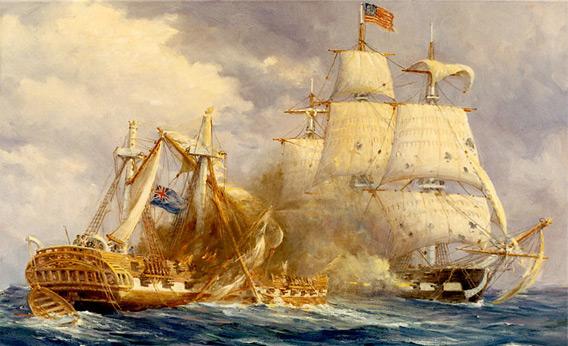
The impact of the war in British North America was experienced mostly in Upper Canada and on the Great Lakes but the other colonies, including Nova Scotia, also had a role to play, primarily at sea. This activity was led by the Royal Navy from its North Atlantic Squadron base at Halifax, joined by privateer vessels from home ports along the Atlantic coast and Bay of Fundy.

The War of 1812 was part of a much larger European struggle which ended with the Treaty of Ghent, signed on 24 December 1814 and ratified by the United Kingdom six days later. News travelled slowly in those days, however, and it took a long time for sailing vessels carrying mail and newspapers to cross the North Atlantic in winter. As a result, the United States did not sign the treaty until February 1815 — and in the meantime unknowingly continued the hostilities, with a significant victory at the Battle of New Orleans in January.

Explore these resources on their website to learn more about Nova Scotia’s involvement in the War of 1812: