"Tales of pioneer hardship and deprivation have been told many times. Yet still we remember in wonder, that people accomplished so much with so little; that men and women with simple tools, their bare hands, and their own inventiveness cleared the land, drained the swamps, made their own clothing and provided their own food. Through all these difficulties God was with them and they wanted their children educated intellectually and spritually." from Norfolk Street United Church history

Thursday, March 13, 2014

The Treasures of Napoléon: A Rendez-Vous with History


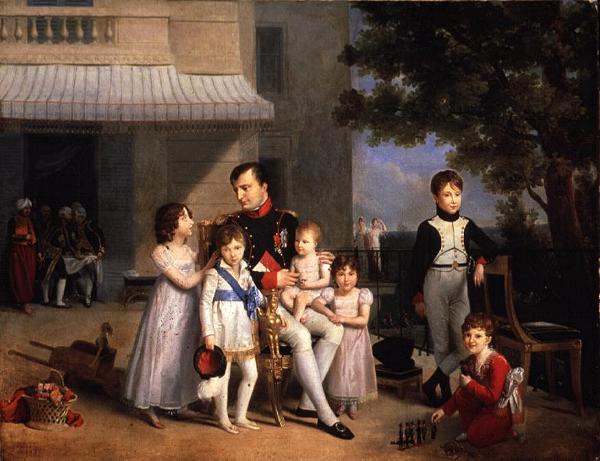
MONTREAL, March 13, 2014 /Canada NewsWire Telbec/ - From May 16 to September 1, the Crypt of the Notre-Dame Basilica (Espace B),ordinarily closed to the visitors, will open to house the Treasures of Napoléon exhibition. More than 350 art objects that once belonged to the famous emperor will be on display, allowing the public an intimate look at the "Empire" style which characterized that historic era. Organized by Exhibits Development Group in cooperation with the Chalençon Collection in France, the exhibition is the largest of its kind ever to cross the Atlantic. For the occasion, the Hon. Serge Joyal will also be lending items from his personal collection.
"We are thrilled to be the hosts for this exhibition. Nothing like this has ever been seen on such a scale in North America," said Yoland Tremblay, executive director of the Fabrique de la paroisse Notre-Dame de Montréal, at a press conference announcing the exhibition's arrival. The choice of the Crypt of the Notre-Dame Basilica to house the pieces is not without significance, as this masterpiece of architecture in Montreal was built in Napoléon's time and, like him, it has stood the test of time as a privileged witness to history."
"I hope visitors will have as much pleasure as I do in discovering these aspects of the life of Napoléon I," said theParis collection's owner, Pierre-Jean Chalençon, who was in Montreal for the occasion. "Ever since my childhood, I've been fascinated by this figure of mythical proportions. To enter into the world of Napoléon is also a way to understand the origins of the society we live in today."
"The figure of Napoléon has long stimulated Quebecers' imaginations, and continues to do so. Even nowadays, in various areas, in advertising and video games for instance, his image is exploited, as are his qualities as a military leader," said the Hon. Serge Joyal, author of Le mythe de Napoléon au Canada français.
"It's quite a challenge to present this outstanding exhibition in an environment that's so full of history. It's an honour to be able to realize this project here in Montreal," said the exhibition's designer, Geoffrey C. Curley of Exhibits Development Group.
Paintings, sculptures, designs, prints and decorative art, including furniture, porcelain and tapestries, will combine to offer an authentic journey through the day-to-day environment of Napoléon. Four main areas illustrating the most significant aspects of the life of the little corporal who became Emperor will be presented:
ARCHITECTUREIt was Napoléon's ambition to make France an empire in which grandiose architecture would express the scale and magnitude of his power. He was quick to appreciate that architects could assist in asserting his power both in the present and in the future. To make this vision a reality, he turned to the architects Pierre-François-Léonard Fontaine and Charles Percier, who published their Recueil de decorations intérieures in 1801. The present exhibition includes a number of of their sketches and drawings.
SCULPTUREDuring this period, the Italian artist Antonio Canova was the standard-bearer of the international neo-classical style. The Empress Joséphine and Grand Admiral Murat, Napoléon's brother-in-law, made it a point of honour to acquire some the most sumptuous works by the great Italian master, several which appear in this exhibition.
DECORATIVE ARTSAlthough Napoléon's policy had viewed the arts primarily as a tool in propaganda promoting an official image of his regime after 1796, as emperor he succeeded, by encouraging artists and craftsmen, in restoring the arts to their former glory, which the years of revolution had eroded.
PAINTINGNeo-classicism also thrived in painting. The pre-eminent French painter of the era, Jacques-Louis David, created one of the world's most important schools of painting, and under his influence the Empire style spread throughout Europe.
These outstanding artworks will be on display in galleries and environments recreated to bring visitors into intimate contact with this larger-than-life figure. The exhibition will be divided into five sections:
I.
JOSEPHINE AND THE CORONATION
II.
MARIE-LOUISE AND THE KING OF ROME
III.
NAPOLÉON AND HIS FAMILY
IV.
THE ARTS AT THE NAPOLEONIC COURT
V.
NAPOLÉON ON SAINTE-HÉLÈNE ISLAND
The Treasures of Napoleon: A Rendez-Vous with History.

Wednesday, February 26, 2014

The Inconvenient Indian: A Curious Account of Native People in North America.


GUELPH, Ontario February 25, 2014 - University of Guelph Campus Bulletin - Thomas King, professor emeritus in English at the University of Guelph, has won the $40,000 British Columbia National Award for Canadian Non-Fiction.
The award was announced at a ceremony in Vancouver on Friday afternoon. The award recognizes Canadian literary non-fiction and is one of the most prestigious prizes in Canadian literature. King’s book was selected from 140 submissions.
King, a writer and broadcaster and the first aboriginal Massey lecturer, was recognized for The Inconvenient Indian: A Curious Account of Native People in North America.
He says he tapped into his own background — from his study and teaching of native history to his experience as a native affairs activist — to write the book.
“I know that people have generally very little bits and pieces of native history that they understand, but they really do not understand the arcs of native history,” he told CBC News.
“Whenever you go back into your past and look at the history that you’ve been part of, when you look at history that happened before you were born to the people you’re a part of, it hits spots that are fairly painful.”
King is one of Canada’s most well-known and respected authors. In 2004, he won the Trillium Book Award, Ontario’s premier prize for literary excellence, for The Truth About Stories, published from his Canada Massey Lectures. The lectures were presented in fall 2003 over nine days in five provinces. They were recorded and broadcast on the CBC Radio program Ideas.
He has been short-listed twice for the Governor General’s Award and has won the Canadian Authors’ Award for fiction and the American Indian Film Festival Best Screenplay award for Medicine River. He received the Aboriginal Media Arts Radio Award for Dead Dog Café Comedy Hour, a popular CBC Radio show he starred in and created. In January 2003, he received the National Aboriginal Achievement Award for arts and culture.
The Inconvenient Indian was also one of five books shortlisted from 124 nominees for the $25,000 RBC Taylor Prize, which recognizes outstanding Canadian non-fiction. The winner will be announced March 10.
King began teaching at U of G in 1995, after completing his PhD at the University of Utah.

Tuesday, February 25, 2014

Tales from the Vault: diary offers glimpse into life of renowned OVC surgeon


GUELPH, Ontario February 24, 2014 - Ontario Veterinary College Bulletin
Throughout its long history, the OVC has been home to a number of distinguished faculty members who made a significant impact on science and the veterinary profession. Many of these individuals were pioneers in their fields.
One such individual was the owner of the diary shown here. W.J.R. Fowler graduated from the OVC in 1899. In 1902 he was hired to teach anatomy, beginning a career at the OVC that spanned more than 50 years. A globally recognized veterinary surgeon, he was the first Canadian to teach veterinary surgery and was well-known for his surgical demonstrations, particularly his ‘roaring’ operation on horses.
Journals and diaries are a rare glimpse into the personal and working lives of individuals and we are fortunate to have several of Fowler’s diaries in the C.A.V. Barker Museum of Canadian Veterinary History. The page here is from his 1922 diary and mentions the first lecture he gave to a group of fourth-year surgery students at the new OVC buildings in Guelph following its relocation from Toronto. 
Throughout this 1922 diary, Fowler chronicles his busy teaching schedule, packing up his home and family to move to Guelph, and the various service calls he made to farms and other facilities year. It gives us a rare and unique glimpse into a significant moment in the OVC’s history and what it must have been like for the college to transition from Toronto to its current home.
— Lisa Cox

Monday, February 17, 2014

Statement by the Honourable Shelly Glover, Minister of Canadian Heritage and Official Languages, on the Occasion of Heritage Day


OTTAWA, Ontario February 17, 2014 /Canada NewsWire/ - More than ever this year, Canadians are invited to celebrate Heritage Day. This year's theme proposes to have fun with heritage by visiting historic places made for play in our local communities.
As Minister of Canadian Heritage and Official Languages, I encourage Canadians of all ages, but especially our youth, to experience and enjoy the rich history of Canada through its historic places for play on this Heritage Day.
As we approach the 150th anniversary of Confederation in 2017, I strongly believe it is important to provide Canadians with opportunities to improve their knowledge of Canada and its history. On behalf of Prime Minister Stephen Harperand the Government of Canada, I encourage everyone to discover and celebrate the unique heritage that brings us together as Canadians and makes us all proud.
Established in 1973 by Heritage Canada The National Trust, Heritage Day is celebrated every year across the country on the third Monday of February. It is meant to encourage the preservation and promotion of Canada's nationally significant historic, architectural, natural and scenic heritage.

Friday, February 14, 2014

2013 Lieutenant Governor's Ontario Heritage Award recipients announced

photo credit: BRIAN THOMPSON Brantford Expositor


TORONTO, Ontario February 14, 2014 /Canada NewsWire/ - Next week, the Honourable David C. Onley will present the 2013 Lieutenant Governor's Ontario Heritage Awards for outstanding contributions to the identification, preservation, protection and promotion of Ontario's heritage.
"Each year, volunteers play an integral role in conserving the heritage of this province. I'm pleased to recognize the achievements of these dedicated individuals who have made outstanding contributions to keeping our history alive for the benefit of future generations." - The Honourable David C. Onley, Lieutenant Governor of Ontario
Recipients of the 2013 Lieutenant Governor's Ontario Heritage Awards include:
  • 18 individuals receiving the Lifetime Achievement Award for volunteer contributions to the conservation of community heritage over a period of 25 years or more.
  • 32 young people (one individual and one group) receiving the Youth Achievement Award for exceptional voluntary contributions to heritage conservation. The individual honouree will also receive a $2,000 post-secondary scholarship, jointly funded by the Ontario Heritage Trust and Great-West Life, London Life and Canada Life - sponsors of the Trust's Young Heritage Leaders program.
The Lieutenant Governor will present the awards at a Queen's Park ceremony on February 21, 2014. This presentation is part of the province's annual celebrations marking Heritage Week.

"The Ontario Heritage Trust is delighted to see these individuals receive special recognition from the Lieutenant Governor for their achievements in heritage conservation. It is the hope of the Trust that the impressive accomplishments of these volunteers will encourage others to follow in their footsteps." - Thomas H.B. Symons, Chairman of the Ontario Heritage Trust
QUICK FACTS
  • The Lieutenant Governor's Ontario Heritage Awards are administered by the Ontario Heritage Trust, an agency of the Government of Ontario dedicated to identifying, preserving, protecting and promoting Ontario's heritage.
  • Nominations for the awards are submitted annually by municipal and regional councils, First Nation band councils, Métis community councils and schools from across the province to recognize local contributions to heritage conservation.
LEARN MORE
The Ontario Heritage Trust is an agency of the Government of Ontario dedicated to identifying, preserving, protecting and promoting Ontario's heritage.

Friday, January 17, 2014

How Do You Want to Celebrate the 150th Anniversary of Confederation?

Photo Credit: Wellington County Museum and Archives - Circa 1868

"Have Your Say" about the celebrations in 2017

ST. CATHARINES, Ontario, January 17, 2014 /Canada NewsWire/ - Rick Dykstra, Member of Parliament for St. Catharines and Parliamentary Secretary to the Minister of Canadian Heritage, on behalf of Minister of Canadian Heritage and Official Languages Shelly Glover, today conducted consultations in St. Catharines to seek Canadians' views on how they would like to celebrate the 150th anniversary of Confederation.

"As we shape plans for Canada's 150th anniversary, I encourage Ontarians to let our Government know how they want to celebrate Canada's history, values, and traditions. We are fortunate and so proud to call Canada home, and we have an opportunity to celebrate together who we are as Canadians, where we come from, and why we represent such a great country." - Rick Dykstra, Member of Parliament for St. Catharines and Parliamentary Secretary to the Minister of Canadian Heritage

Quick Facts

...The Government of Canada is holding roundtables this winter with individuals who are active in their communities and represent a wide range of organizations or groups from across the country.

...In addition to the roundtables, Canadians are invited to have their say by completing an online questionnaire at Canada.ca/150.

...Both the roundtable participants and Canadians who complete the online questionnaire will be asked five key questions.

...The data collected will provide insight into the types of activities and projects that resonate most with Canadians and will help us plan the celebrations.

...Over the next three years, as we approach the anniversary, we will celebrate key historic milestones that have defined our country.

"Canada's 150th anniversary will give us the opportunity to reflect on all the things that make Canada the united, prosperous, and free country it is today. I invite all Ontarians to tell us how they would like to celebrate." - Shelly Glover, Minister of Canadian Heritage and Official Languages

Associated Links

Canada 150 Website

Have Your Say! Questionnaire

Follow us on Twitter: @CdnHeritage

Friday, January 3, 2014

Lighthouse at Heart of a Bloody Battle Protected - Windmill Point Lighthouse Designated under Heritage Lighthouse Legislation


PRESCOTT, Ontario, January 3, 2014 /Canada NewsWire/ - The Honourable Leona Aglukkaq, Canada's Environment Minister and Minister responsible for Parks Canada, today designated the Windmill Point lighthouse, a site at the heart of a bloody battle in Upper Canada (Prescott, Ontario), as a heritage lighthouse under Canada's Heritage Lighthouse Protection Act (HLPA).

The HLPA, which was adopted in 2008, allows for the protection of federally-owned lighthouses on Canada's coastal and inland waters that have significant heritage value. Administered by Parks Canada, the HLPA helps ensure Canada's maritime history is protected for the benefit and enjoyment of present and future generations.

Canadians have nominated hundreds of lighthouses to be considered for designation under the Act.

 "I am pleased that the centrepiece of the Battle of the Windmill National Historic Site will now be protected for the benefit of future generations. This lighthouse was a witness to historical events that have impacted Canada." - Leona Aglukkaq, Canada's Environment Minister and Minister responsible for Parks Canada 

Windmill Point Lighthouse is the key symbol of the Battle of the Windmill in Upper Canada. This four-day battle in 1838 between British troops and local militia defeated an invasion force of 300 American "Hunters" and Canadian rebels. It brought an end to the Rebellion of 1837-1838.


Located close to the American border, this lighthouse was initially built as a windmill before being converted to a lighthouse in 1874.


For over one hundred years, this lighthouse was associated with the system of navigation aids along the St. Lawrence and the Great Lakes.


The heritage lighthouse and National Historic Site of Canada is administered by Parks Canada.

"I am thrilled that Canadian history is one of our government priorities and that we are taking action to protect and preserve cherished sites like Windmill Point Lighthouse, which has been an integral part of Eastern Ontario heritage for almost 200 years and an important tourist attraction for the area." - Gordon Brown, MP, Leeds-Grenville